NC Museum of History Bluegrass Programming During IBMA


For the next three years, Raleigh will be home to the International Bluegrass Music Association annual World of Bluegrass convention. I am one of the speakers in the NC Museum of History programs to welcome IBMA:

 Tuesday, September 24

         1–3 p.m.          North Carolina is the Banjo State, with Bob Carlin

        5–7 p.m.          Bluegrass in North Carolina, with Tommy Edwards

 Wednesday, September 25

         1–3 p.m.          Bluegrass Music: How North Carolinians Have Contributed, with Art Menius

        5–7 p.m.          The Earl Scruggs Center: Music and Stories from the American South

Thursday, September 26

       1–3 p.m.          The Story of Bluegrass and Raleigh’s Contribution, with Ron Raxter

       5–7 p.m.          Bluegrass Jam, with Pinecone

Friday, September 27

       1–3 p.m.          [Topic TBD*], with Wayne Martin

       5–7 p.m.          Gibson, Scruggs, and the Three-Finger Style, with Jim Mills

When I was little, The NC Museum of History was in WPA institutional building that mostly housed the state department of Education – “EDVCATION” in the granite lettering outside. Opened in 1902, “The Hall of History” and little changed since moved there in 1939, snaked through the first floor with permanent displays focusing on transportation, weapons, and household furnishings of rich white people. The latter appeared to have been 90% of the state’s population before the War, after which it dropped to 80%. I learned a lot about how our heroes fought against cruel military occupation of NC by the United States. Generations of school bus drivers struggled to find the Hall of History since the maps they were sent had South at the top and north oriented to the bottom.

By the time I was a young public historian at NC Dept of Cultural Resources (a product of the standardization of federal and state cultural bureaucracies during the 1960s and 1970s), an equally static history museum telling a more modern story, albeit with many of the same artifacts, occupied the east wing of our 1968 Archives & History/State Library edifice between the 1964 Legislative Building, in which the General Assembly meets rather than the 19th Capitol building in the center of Raleigh, and the gingerbread Victorian Governor’s Mansion. I always imagined the Addams Family as our first family. In 2013 some would say…..

The current NC Museum of History opened in 1994 between the Legislative Building and the historic State Capitol (walk out of the Convention Center on the Fayetteville Street side and look left. Can’t miss it.) The new museum has a research library, a variety of classroom spaces, and a large and well-equipped, 315-seat auditorium. Large gallery spaces total 55,000 square feet, nearly four times the exhibit area available in the old building. Design shops, storage areas for over 250,000 items, and conservation labs are now all under one roof.

The NC Arts Council, whose staff is being slashed by the legislature, occupies the previous museum space. Five museums in 92 years doesn’t seem like the best long term planning for growth.

Laura Cortese Into the Dark


Laura Cortese Into the DarkImage (www.thisislauracortese.com) released on April 23, 2013

Reviewed by Art Menius (WMMT-FM, WCOM-FM, WCHL-FM)

Laura Cortese has been making substantial recordings for almost a decade, collaborating with the likes of Jefferson Hamer, Rose Cousins, Aoife O’Donovan, and Brittany & Natalie Haas. Her fifth project, Into the Dark, is where her potential matures into a compelling blend of traditional and pop-folk music. This is potent, rich music that demands repeated listening.

Cortese fuses the new and old, as well as classical, folk, and pop influences, into one unified sound of her own that takes full form on Into the Dark. Using the talents of Hamer, Cousins, the Haases, fiddlers Mariel Vandersteel and Hanneke Cassel, Dirk Powell, and many others, Cortese crafts an acoustic wall of sound that propels her confident vocal delivery.

Cortese’s voice gives us lyrics that blend the old and new just as powerfully as her compelling music. She jumps off from classical folk idioms (“Richmond boys they cheat and steal; Drinking brandy til they get their fill” starts the album on “For Catherine”) into modern issues like violence against women (“Broken bottle there I lay; Brandy mixing with cold clay”). The title track is a tour de force of writing, performance, production, everything – a tune that can be played on commercial, public, and community radio from pop to folk to trad.

Many excellent albums have already appeared in 2013. Laura Cortese’s Into the Dark could be the best so far.

Carrboro gets it is own bluegrass brews today


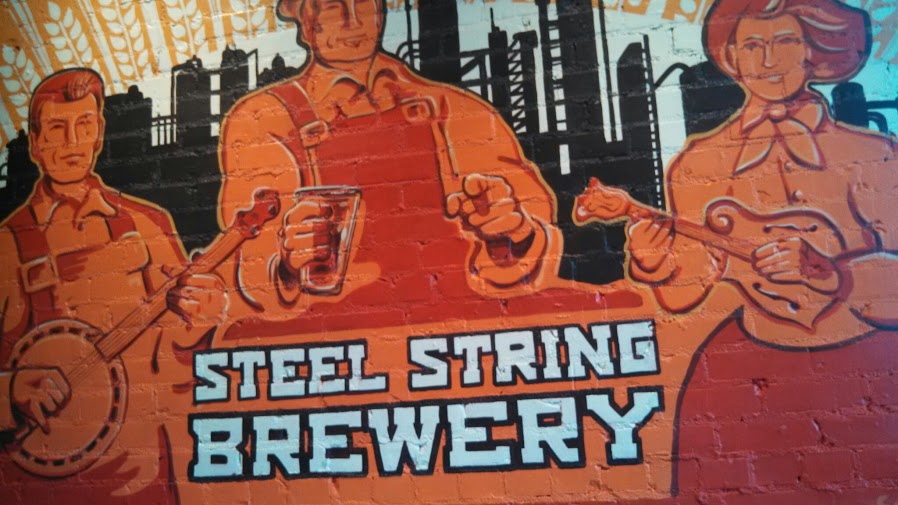
Many bars and clubs present bluegrass music, a couple, such as the Station Inn, all the time. Conversely, many bars, such as Natasha’s in Lexington, KY, exist in the Bluegrass. Now we have a craft brewery that not only includes bluegrass music in its soundtrack and decor, but in its brews.Steel String Brewery IMG_20130427_170037_515

Carrboro, NC’s first modern local craft brewery, Steel String Brewery, will have a soft opening at Noon today (April 27) and Sunday (April 28). The vision of a trio of dedicated young men, Steel String’s opening is a testament to their perseverance. They seemed poised to open fully a year ago when I first returned to Carrboro, but financing proved more problematic than they had imagined.

Now the Steel String rings in the former location of old Carrboro staple The Trading Post between Glass Halfull and Wendy’s. The brew pub opens full time on May 10. The names of featured beers show their musical interests:

Image

Big Mon IPA is named in honor of Bill Monroe, the Father of Bluegrass, and packs an appropriately hefty 6.7% alcohol content.

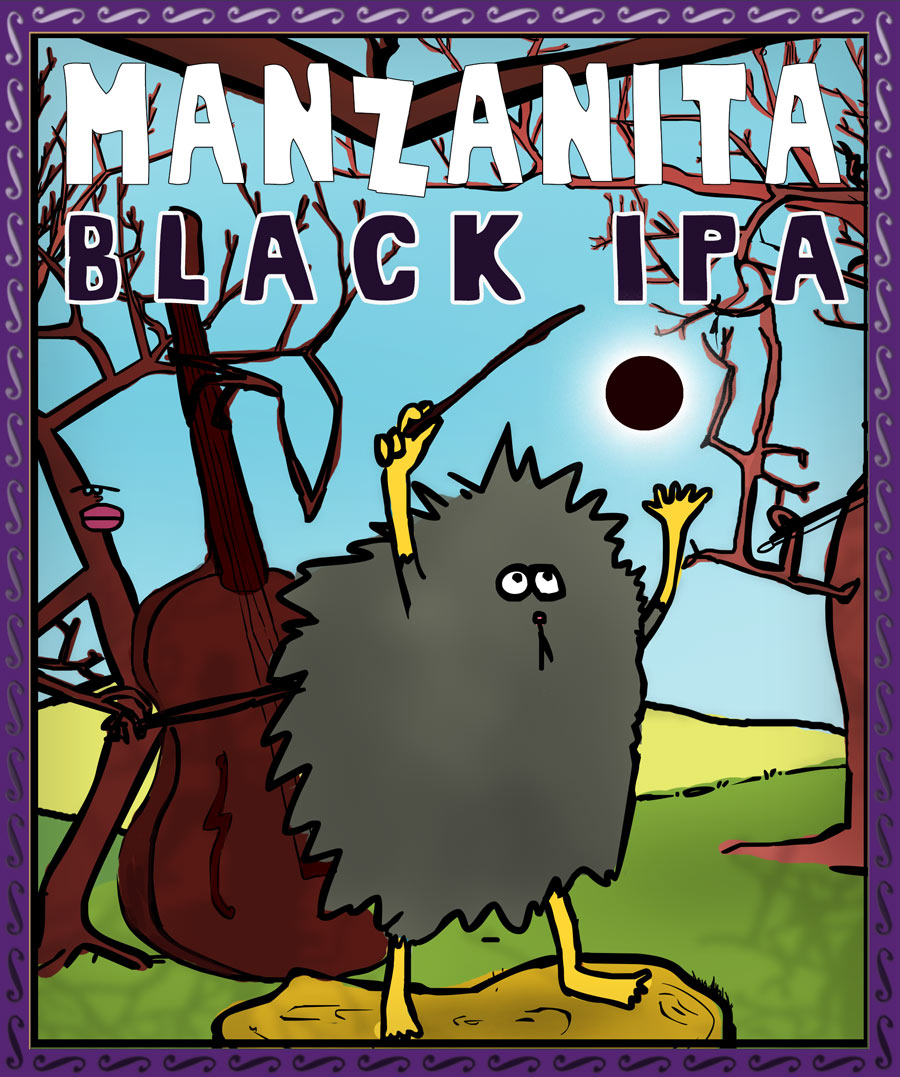
The Dark IPA, Manzanita (7.4%), is similarly obvious inmanzanita-label1 recognizing extraordinary guitarist Tony Rice, who lives about a half hour west. They write: “Just as Tony Rice pushed the boundaries of a what a guitar could do for bluegrass music in his landmark album Manzanita, our Black IPA pushes the boundary of the IPA, augmenting the hop-heavy style with notes of chocolate, roast, and fresh-brewed coffee.

Both those IPAs should be ready for sale by mid-May. We sampled both Exile on Weaver Street, a seasonal, and Maggie’s Farmhouse Ale (5.6%), which shouts out to Dylan, today. Each offered complex, challenging, ultimately refreshing tastes. The Steel String brews can be taken home in 32-ounce grouters in addition on premises consumption.

Rubber Room Session Ale (4.7%) pays homage to popular local studio owned by Jerry Brown of the Shady Grove Band and, by transference, Porter Wagoner.

http://www.dailytarheel.com/article/2013/04/brewery-to-come-to-carrboro-in-may

Link


Art Menius & Jeri-Lynn Schulke on WCOM Speakeasy

Talking about The ArtsCenter with Claudio on Carrboro WCOM-FM 103.5, January 8, 2013

Link


NPR FolkAlley Top 10 Folk Releases for 2012

Lots of familiar names here including The Stray Birds (coming to The ArtsCenter in Carrboro, NC on May 5, 2013), Carolina Chocolate Drops, Iris Dement, and Rose Cousins. Good stuff.

Blind Owl Band Review


Recording Review

The Blind Owl Band

Rabble Rousing (Jan 2012)

http://theblindowlband.com/


At their best, the Blind Owl Band resembles an old-time version of the Ramones, with pure decibel level and accelerated tempos covering over the music happening underneath. Call it Thrash Time or Grungegrass, perhaps. In any case, Blind Owl Band dives headlong into the mosh pit of old-time as a dance music, in this case dance music for young people in outstanding physical shape.

Seriously, on the aptly titled early 2012 album Rabble Rousing, the Blind Owl Band is on to something, at least their own recognizable sound on the left edge of the roots, acoustic world. What the Saranac Lake, NY quartet calls “Original Rowdy String Music” becomes compelling in a raw power and punk energy that aims to go beyond any excesses of the Avett Brothers. “We use the instruments of our ancestors, but play music of our time that is influenced by all that has happened in the musical world over the past 23 years. We hope that we can achieve a unique personal sound with our music through a raw instrumentation.”

The Blind Owl Band consists of Arthur Buezo (Guitar, Vocals), Christian Cardiello (Bass), Eric Munley (Mandolin, Vocals), and James Ford (Banjo, Vocals). They perform almost entirely original music with an emphasis on rhythm with the breaks often hidden inside a wall of noise. Listen to “Broken Bells.” Often this works brilliantly as on :”Fiddle Don’t,” “Missoula, Montana,” “Whipawell,” and the bluegrassy “Devils My Witness.” Occasionally, it breaks down into something that sounds like the Kingston Trio on meth, for example, “Scorpion.”

Rabble Rousing will provide too punk for a lot of older fans. The Blind Owl Band, however, connects two genre that have more in common than their obvious differences. This group could evolve into something very special that transcends any conventional musical genre.

Image

Listen to The ArtSpot anytime


You can hear podcasts of complete The ArtSpot with Art Menius programs by date and guest at http://www.chapelboro.com/pages/9680071.php  Shows air live on WCHL-AM 1360 (and starting in August on FM too) and on http://www.chapelboro.com at 11:30 AM Eastern on Saturdays.

Botkin Changed the World


I was thinking for no particular reason this morning about how my generation benefited from the efforts of folklorist Benjamin Botkin, whose books including Treasury of American Folklore provided the curricular materials for folk music in the schools from the Baby Boomers.Other than a prize from the American Folklore Society, few know his name today.

Publishing from the mid-1940s on, Botkin’s influence on educators made it possible – along with the summer camps – for the Boomer generation to be exposed to folk music and singing together in a context other than the church, home, or local community. The timing was perfect for both contributing to and benefiting from the Folk Scare, which was the third folk revival of the four during the middle half of the 20th Century.

Poor Ben Botkin ended up sliced and diced for these revolutionary efforts that changed the lives of many of us on this board. Because he had been – along with Pete Seeger and many others – in People’s Songs, the radical forerunner of Sing Out!, the FBI hassled him off and on for the last 30 years of his life.

Meanwhile, academic folklorist Richard Dorson at Michigan State and IU, reacting against the second folk revival right after WWII – Weavers, Woody, Josh White), denounced Botkin as a promoter of “Fakelore” in a 1950 essay that had a profound and lasting influence on folklorists of my generation. Dorson, who began his career studying Davy Crockett, lumped Botkin in with Paul Bunyan. Dorson was correct about many things, but the sustained attack on Botkin crossed a line.

Dorson trained more American folklorists from 1945 until 1980 than any other academic – even more than affable Kenny Goldstein at Penn who worked in both the commercial recording and scholarly worlds – and these students have taught the next generation.

More people my age wanted to be a loser with a gun than a fakelorist.

Three Revolutionary Acts from SERFA


The 2012 SERFA conference in Montreal NC presented a trio of impact acts changing the face of American music. All are young, feature strong original music, and include open back banjos.
The Stray Birds have the most
conventional sound, but the best songs and the vocals.
Emily Pinkerton delivers a potent fusion of Old-Time and Chilean music.
Harpeth Rising draws on both classical and Old-Time which commentary on contemporary issues.
The most edgy  exciting music today is happening in the young string band scene. The folk revolution is on.

Busy Saturday May 5th


For those of you keeping score at home (how about those 1st place Dodgers), on Saturday, May 5, I’ll be on the radio in KY, on the radio in NC, and speaking in DC.

May 5, the 81st anniversary of the start of the Harlan County mine wars, is the first Saturday in May, so I’ll be hosting From the Roots on WMMT-FM 88.7 from 11 AM until 2 PM Eastern. The best of the new in Old-time and roots music. listen online at www.wmmtfm.org. I’ll post a playlist on www.lazyfarmboy.blogspot.com Highlights include tracks from the latest by Carolina Chocolate Drops, Mariel Vandersteel, Bill Evans & Tim O’Brien, Trampled by Turtles, Blind Owl Band, South Carolina Broadcasters, Atomic Duo, and more. Plus Florence Reece, Aunt Molly Jackson, and Ani DiFranco in honor of the anniversary of the shootout in Evarts, KY.

I take over as host of The ArtSpot on WCHL-AM 1360, Chapel Hill, NC this weekend with an interview with bodhran player Tristan Rosenstock of the Irish trad band Teada. They perform at The ArtsCenter on Thursday, May 10. You can order your tickets for this exciting band on their first tour with new member West Kerry legend Séamus Begley, adding his singing, playing, and stories here. Teada thrives on less played traditional material. Seamus adds his material to their Sligo roots.

ArtSpot airs on Saturday and Sunday each week from 11:30 AM until noon and 7:30-8 PM eastern. Listen live on www.chapelboro.com

Also on Saturday May 5 I’ll be on two panels at the one day NERFA Conference in Bethesda, MD “Traditional Folk” at 10:30 and at Noon, “How to Get Noticed.” This is the most significant Folk Alliance International event in the DC area since the 1996 International Conference, even thought the organization was headquartered here for 10 years. Chapel Hill 1991-1995, DC 1995 – 2006, Memphis 2006-2012, Kansas City 2012 – http://www.nerfa.org/schedules/NERFA%20One-Day%202012%20Workshop%20Descriptions%20-%20Washington.pdf