Camp Springs Today Article in May 2015 Bluegrass Unlimited


camp springs BGU first page

The May issue of Bluegrass Unlimited magazine will include “Camp Springs Today,” a greatly expanded version of my most popular post here ever https://artmenius.com/2014/08/31/a-visit-to-a-lost-bluegrass-music-temple/ with color photographs by Becky Johnson (host of the Bluegrass Breakdown Wednesdays from 2-4PM on WCOM-FM.  The new version benefits from interviews with Bob “Quail” White, Tommy Edwards, and Fred Bartenstein and the research of Jordan Laney and Ron Roach.

Love & looting in Chapel Hill 1865


Love & looting in Chapel Hill, the last town standing by @artmenius from April 15 2015 Chapel Hill News Love & looting in Chapel Hill, the last town standing

You Can Make David Holt’s State of Music a Public TV Series


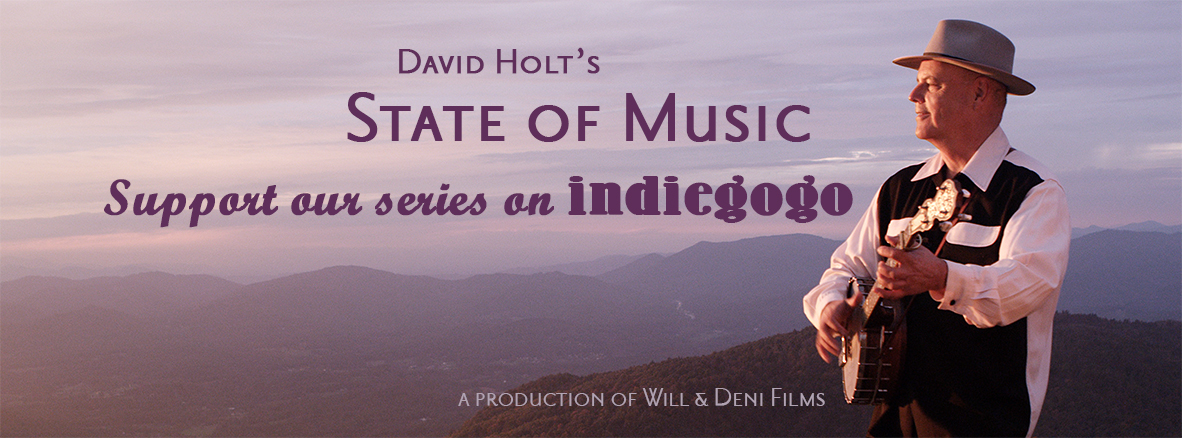
Please join me in contributing to the campaign to make David Holt’s State of Music a public TV series.

You can start by joining the email list for the campaign to make a national public TV series of David Holt’s State of Music http://bit.ly/DHSOMlist

You can make it happen with with your contribution to the Indiegogo campaign for David Holt’s State of Music: http://bit.ly/SupportDHSOM

Watch the videos, read the story of David Holt’s State of Music, and look at the stunning set of perks rewarding donors from $25 to $5000

.Goodtime-FRONT text docatHome-600x416 text

You can join our Facebook community: https://www.facebook.com/SupportDHSOM

Making a series of this outstanding public TV program all starts with you. Please join me in this important effort for bluegrass, old-time, and folk music. I have known David Holt for more than 32 years now, since we first worked together on Fire on the Mountain for The Nashville Network. Nobody, and I mean nobody, has a great skill in introducing roots music to broad audiences through the mass media of television and radio. On January 29, David proved that once again when the one-hour special of David Holt’s State of Music debuted on UNC-TV to more than 32,000 live viewers of North Carolina public TV. Subsequently aired on Blue Ridge Public TV in Virginia, David Holt’s State of Music permits him to introduce people to roots music today, both rising stars like Rhiannon Giddens and Josh Goforth and established masters such as Balsam Range, Bryan Sutton, Bruce Molsky, and the Branchettes.

New FB banner for Art

The success of that special has created an amazing opportunity for David, the non-profit Will & Deni McIntyre Foundation which produces it, and all of us who care about folk music. UNC-TV wants David Holt’s State of Music to become a series for national public television distribution! The potential is enormous, but so are the costs. Raising the $484,000 needed to make it happen will take the contributions of foundations, corporate sponsors, and individuals, like you. Your opportunity exists right now!

You can make this amazing opportunity for roots music on public TV real. Regardless of whether you donate, please help spread the word of David Holt’s State of Music and our campaign. These opportunities don’t come along every day.

Here Are Golf’s Top Brands Going Into The Masters | Adweek


http://www.adweek.com/news/technology/infographic-here-are-golfs-top-social-brands-going-masters-weekend-164012

‘David Holt’s State of Music’ may become a series | The Herald-Sun


http://www.heraldsun.com/lifestyles/entertainment/x626360479/David-Holts-State-of-Music-may-become-a-series

Why is our broadband Internet so Slow


We live in White Cross, Bingham Township, in southwestern Orange County, NC, the home of the University of North Carolina at Chapel Hill. We have only slow DSL from AT&T as an option for Internet access. This retards my home based consulting and marketing business and diminishes our entertainment. Slow speed makes it difficult to sync business files on DropBox for both back up. Watching HD quality video is nearly impossible, so that we are forced to continue to subscribe to expensive satellite TV rather than being able to use lower cost Internet services that better fit our needs. Such a situation this close to the municipalities of Chapel Hill and Carrboro that are courting gigabyte Internet is unacceptable and the direct result of lack of competition. Sadly, MebTel delivers much better Internet service only a couple of miles from our house.

In very rural, low population (20,000 for Letcher County, KY), low income ($11,500 per capita), mountainous southeastern KY where we lived literally at the end of the road near the mountain top, we have 6mbps down via cable. In rural Maryland, we had 13mbps down via cable. Southern Orange County is more populous than either place, so the issue seems to be more lack of competition than population density.

Three solutions occur to me.
a) We are a tantalizing 200 yards from where our phones receive 4G LTE. Were a cell tower constructed nearer to us, we could switch over to an acceptable 10Mbps down via cellular.

b) Expansion of MebTel service area, again tantalizingly close, or

c) AT&T stepping up their game to provide better service to their captive customers.

Isn’t about time that rural Orange County, North Carolina broadband, where the towns talk about Gigabyte, quit lagging behind Letcher County, Kentucky?

Watch the video on Vimeo http://ow.ly/L2


Watch the video on Vimeo http://ow.ly/L2cfH Then support “David Holt’s State of Music” at http://bit.ly/SupportDHSOM

Wendell Berry on Climate Change: To Save


Wendell Berry on Climate Change: To Save the Future, Live in the Present by Wendell Berry — YES! Magazine http://ow.ly/KVQJj

My March column for Chapel Hill News


No more ‘Sugar Mountain’ – My March column for Chapel Hill News section of the News and Observer http://bit.ly/1y6eZaz

Why There Are Too Many Touring Bluegrass Bands


By Art Menius, March 14, 2015

Any “named-system,” as Neil Rosenberg called the minority genre, is going to have certain limitations, such as narrow emotional range or a dependence on technical virtuosity. Whether blues, Celtic, folk, or bluegrass, these limitations prevent these genre from sustained mass popularity relative to any of the pop forms nor the level of gravitas that must be respected like European classical or jazz.
History, even in this century, shows, however, that these genre can achieve short term popularity that delivers a long term residual benefit in audience development. This has happened for bluegrass several times when the music has been able to ride on the shoulders of a mainstream TV or film product.  I also assert that these genre can use audience development tools largely workshopped in theatre and classical music. I do not believe the bluegrass industry has ever seriously tried to do that with the obvious exception of amazingly successful Wide Open Bluegrass in Raleigh the past two years.
Bluegrass in the Schools is admirable, but we need to develop a lot of funding to pay top bluegrass bands to play in elementary schools. We need to direct a lot more promotion of bluegrass events to general audiences, not just to the existing bluegrass audience and partner more effectively with tourism development authorities and convention and visitors bureaus to reach new folks. Bluegrass can never be too visible nor too easy to find.
On the less obvious parts of audience development, theatre groups have been experimenting with pay what you want days and a limited number of free tickets to those who reserve in advance who have never attended before, as well as traditional couponing.
In bluegrass we need to communicate what festivals are like to prepare new audiences to attend, which can be done on websites, rather than assume any fool knows what a bluegrass festival is about.
The lack of bluegrass industry and IBMA self-criticism serves us very badly here for at least two reasons. 1) Expectations have to be realistic as I attempted to frame them at the top of my second paragraph. Expecting  bluegrass to become a pop music, even through changing the music is not realistic. Concomitantly, fears by “traditionalists” that bluegrass will become pop are not based in reality, any more than were 1950s Antioch students’ fears that Lonnie Donegan was “stealing folk music.” 2) We have to cut through the BS to criticize and ultimately change the non-musical shortcomings of the bluegrass industry that prevent bluegrass from maximizing its income potential.
A prime example of the latter – and a third rail that JD Crowe famously touched in 1982 in a Bluegrass Unlimited article – is that far too many bands are performing bluegrass professionally and touring than the market can bear. This has been the case for the last 45 years. The analogy is the American academy since WWII. Universities have for decades churned out more PH.D.’s than they can employ. This has created a surplus labor pool with the universities have exploited brutally through the misuse of the adjunct status.
What I am saying – to be clear – is 1) that for some reason the market is not functioning rationally to limit the number of headline acts that can earn a solid living in bluegrass without day jobs. 2) Especially before the move to Raleigh, IBMA has put too much energy into developing an ever greatly supply of emerging acts when the audience is what is needed. 3) This scenario forces great musicians to work day jobs to support their families, which restricts how much they can tour, depriving fans, limiting how great a band can  become, and contributing the market imbalance.
Bluegrass music can comfortably support perhaps 15 to 25 full time touring bands, which would be more than enough to fill the labor needs of the festivals which hire them. The true interests of bluegrass musicians – as JD told the late Marty Godbey – would be for the rational market place to restrict the number of bands to what it can support. Yet IBMA, the section 501(c)6 organization serving the industry, has developed since 1990 a business model that depends on exploiting the hopes and needs of wannabie acts and thus feeding the labor oversupply.
Most dangerously, the oversupply destroys the ecosytem which creates future generations of bluegrass artists. On the one hand, it eliminates the need for local and regional bands in which talent develops. On the other, it discourages great musicians from performing bluegrass as a lifetime career choice. This ultimately builds a pyramid with no base.
Part of what I am implying is that those who play for the love of it are being taken advantage of financially, depriving them of the income they deserve for doing what they love. This produces the market irrationality that is even a greater issue now that income from selling recordings and from writing and publishing has been devastated by technology.