Why Bob Lefsetz Hates What He Does About America


Music blogmeister Bob Lefsetz has rarely been short of opinions, distributed in daily bursts on everything from what’s wrong with the music business to which Elton John album is most essential. Today he surpised me with a powerful socio-political column – in fitting with his politics – put with a rare sustained accuracy point after point.

Read it now: http://lefsetz.com/wordpress/index.php/archives/2014/08/19/hate-america/

I responded, after compliments and pleasantries, thus: 

From conformity to Ferguson, the breakdown of actual community has allowed 80% of the issues plaguing society to flourish. Community in America did not breakdown simply because of demographics and the ravages of emerging technologies. Community and capitalism had co-existed for decades.

Rather the deregulation largely associated with Reagan, but continued enthusiastically under Clinton, especially with NAFTA, removed a series of protections. Those prophylactics kept local economies functioning and geographic communities relatively staple, while placing a governor on capitalism’s engine. The effect proved similar to the way a healthy Arctic ice cap keeps the Jet Stream in check. In order to unchain capitalism, these essential policies disappeared.

  • Airlines and buses no longer had to serve smaller towns and cities that did not make economic sense.
  • Union rights won in long strikes and pitched battle eroded.
  • Savings and Loans ran amok as soon as unchained.
  • Banks could expand into other financial services that connected them to international markets.
  • Industries no longer tied themselves to communities but moved wherever labour costs were lowest and tax payer funded incentives the greatest.
  • Radio and TV stations and newspapers no longer had to have local ownership and one entity could own multiple properties.

The most damaging blows of all to the health of main street America culminated in Riegle-Neal Interstate Banking and Branching Efficiency Act of 1994. That completed a 15 or so year process during which state banking regulations collapsed and regional and national banks like BOA ($50B in losses on its brilliant Countrywide acquisition) and Wells Fargo to evolve.

The lesson I learned in coal country was that local control of a community’s economic destiny forms the essence of community health. The more insulated from the global marketplace, the more stable and self-sustaining the community. When banking is not local, valuing community over participation in a global financial marketplace for multiple instruments, our communities become mere pawns in the game. The message becomes consumption is good, making money is good, and only individuals matter, not communities.

This brings us back to issues with art today. My colleagues in the Voices From the Cultural Battlefront offer a surprising simple analysis. When money matters more than culture, communities die.

That is what is happening to America, my America, and I hate it.

Count me as an extremely radical localist. 

Ticket Sales Aren’t the Solution for Non-Profit Theater


Mike Scutari: “Moving forward, the company will rely less on ticket sales and instead focus on soliciting more individual donations as well as corporate sponsorships. The company will also broaden partnerships with local organizations to create a broader base of support across the community.”

This is case study in why copying for-profit earned income strategies usually cannot work in non-profit theater.

Check out this fascinating read from Inside Philanthropy here

My Mother, Lucy Menius, 12/14/1919 to 7/28/2014


Lucille Clarke Varner  “Lucy” Menius

RALEIGH, NC:   Lucille Clarke Varner  (“Lucy”) Menius, 94, died quietly on Monday afternoon, July 28, 2014, at Falls River Court in Raleigh following a prolonged battle with dementia. A memorial service will take place at White Memorial Presbyterian Church in Raleigh on Tuesday, August 5, at 2 pm.

Lucy was born in Chapel Hill on December 14, 1919 to H.B. Varner (dec 1938),  and Fanny Clarke Varner (dec 1979), both Orange County natives. She was graduated from Chapel Hill High School and then completed a two-year secretarial program at Pace College in New York City. She met A.C. (Buck) Menius, Jr., of Salisbury when he was a graduate student at UNC, from which he received the Ph.D. in 1942.     

During the war years she worked for the UNC Press. Her greatest accomplishment there came in assisting the octogenarian former Secretary of Navy, Ambassador to Mexico, and News & Observer editor Josephus Daniels in the completion of the final tomes of his multi-volume memoir, Editor in Politics (1941), The Wilson Era: Years of Peace, 1910-1917 (1944) and Shirt-Sleeve Diplomat (1947).  

Lucille Varner and A.C. Menius, Jr. married in Thurmont, MD on March 31, 1946. They moved first to Clemson, SC and then to Raleigh in 1949. At NC State College/University, Dr. Menius, who died on October 13, 1996, guided building the first non-government nuclear reactor in the USA and served as Dean of the School of Physical Sciences and Mathematics from 1960 until 1981.   In addition to serving as an exemplary faculty spouse, Mrs. Menius took on multiple leadership roles in arts and social service non-profits in Wake County throughout the 1960s and 1970s. Her board service included the NC Symphony Society, Hilltop Home, NC Museum of Art, Raleigh Fine Arts, and the Wake County Arts Council. Lucy was President of White Memorial Presbyterian Women (1961-63) and received the Honorary Life Membership in Presbyterian Women, Presbyterian Church, USA (1993). Lucy was a long time member of the Ola Podia Book Club and, for sixty years, Carolina Country Club. The Meniuses were active in the English Speaking Union and the Sphinx Club, among other organizations.  

Mrs. Menius is survived by her son, A.C. (Art) Menius III of Carrboro and his wife, Rebecca Johnson; a nephew Bruce Varner, Jr., a niece by marriage, Nancy Welchel, and her husband Ken, of Charlotte, and cousins including Tommy Bullock of Durham.   Memorial contributions may be made to The ArtsCenter; 300-G East Main Street; Carrboro, NC 27510; www.artscenterlive.org  .   Arrangements by Brown-Wynne Funeral Home, Saint Mary’s St., Raleigh.

Please see Lucille Clarke “Lucy” Varner Menius on Page 6B of Sunday, August 03, 2014 issue of News and Observer

Announcing the new Phase of my Life and Career


Three trains collided this July, yet they all faced the same direction. The first to leave the station held the stress, exhaustion, and long term overwork combined with poor physical and mental health that led to the sabbatical during July and August. The second brought a load of serious self-doubt about whether come September I could again summon up the intense level of energy The ArtsCenter demands, whether I could face day after day the stress of the position. The third train carried my mother away and brought the realization that while I am not ready to retire altogether; I no longer have to work full time. I no longer have to endure the wear and tear of one 60 hour work week after another.

I did not expect all this to come together so quickly, but it has with the inescapable conclusion that this proves the right time to retire from full-time work and take advantage of being able to afford self-employment. I love The ArtsCenter and will miss daily being part of its bright, exciting future. I look forward to returning to the project-specific contract work I love without the financial challenges of earning a full income from those activities. For once, during this next phase of my life, I can choose only work that gives me joy and satisfaction.

I am, therefore, announcing my retirement as Executive Director of The ArtsCenter effective at the completion of my sabbatical on August 31, 2014. Since I am on sabbatical, this means that I am no longer involved in day-to-day operations of The ArtsCenter.

Faith Petric (1915-2013)


I just learned reading the AFM Local 1000 newsletter of the passing of the remarkable Faith Petric at 98 seven months ago via a fine obit by Joe Jencks. Visit here for a number of moving and well composed blog posts by Faith’s daughter.

Born halfway between Woody Guthrie and Pete Seeger in 1915, Faith had become a guiding spirit of the San Francisco folk singing scene half a century (or half her lifetime) ago. With a vast knowledge of folk songs and a commitment to both community and radical change, Faith inspired several generations, including such artists as Holly Near, Cathy Fink, and Marcy Marxer.

I met Faith at the initial Folk Alliance gathering organized by Elaine and Clark Weissman in Malibu in 1989. A living Wobby and a living Rosie the Riveter Liberty ship builder, there representing the San Francisco Folk Club she had led since 1962 and Sing Out! as a board member and contributor. Faith’s career as a full time folk singer began in 1970 and lasted until September 11, 2010.

A 2010 profile can be found here.

The Sing Out! obituary here.

After The Race: Book Review


After the Race
 
After the Race by Michael B. Jones
Reviewed on amazon.com by Art Menius
   

5.0 out of 5 stars Perfect combination of page turner and serious literature, April 20, 2014
This review is from: After the Race (Kindle Edition)
In a stunning debut novel, Michael B. Jones manages to marry a gripping psychological adventure to a serious exploration of human emotion and America during the Reagan and elder Bush years. In watching the decline of his alcoholic, sociopath ex-Marine father Wayne, Charles Reed witnesses the moral decline of America from 1986 to 1993. Jones thus delivers a meditation on the effect of growing up during the “greed is good” era as much as on dysfunctional families and alcohol and painkiller abuse.

The reader knows that Wayne and Charles on are a hellbound train before you get through the first two short chapters, but finding out how it plays out and, more importantly, why become as consuming as Wayne’s cravings for alcohol. Jones writes crisply with exceptional insight into and empathy for the failed workings of Wayne’s mind.

Comparisons to The Great Santani prove easy, but After the Race is a different book with a far more entertaining narrative and a young man as morally complex and confused as Holden Caulfield.

On Inside Llewyn Davis


 Freewheelin By Art Menius 1-20-2014; new ending 1-21-2014

The much discussed Coen Brothers film Inside Llewyn Davis arrived in Chapel Hill fully five weeks after its theatrical release in New York and LA and thus a year after its Toronto festival debut. I felt as if Becky and I were the last folks, along with the other 20 people in the Sunday matinee office, to screen it. I had known less about movies I have already seen.

I enjoyed Inside Llewyn Davis. It kept my attention and did not permit my mind to wander much, which is an accomplishment. I only thought about Van Ronk when Davis played “Dink’s Song.” Otherwise, he no more made me think of Dave than any other bearded white guy with an acoustic guitar born during the 1930s would.

Point mayor cover for web#1: The Mayor of Bleeker Street was source material for this time and place that also borrowed some incidents from Van Ronk’s life, such as getting slugged in an alley by Jean Ritchie’s husband George Pickow.

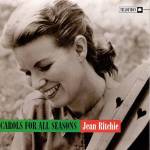
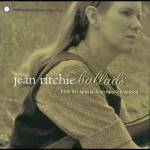
Question #1: Jean and George came to a Kathy Mattea concert I produced in Whitesburg, KY in June 2008. They looked about 15 years older than portrayed in the film set in 1961. The historical Jean, a lap dulcimer player from Kentucky not an Autoharpist from Arkansas, would have been just 38 at the time. More than a dozen years had pasjean ritchie 1962 LP coversed since she first opened foJean ritchie 1959 LP coverr the Weavers and Woody Guthrie and nine since the first of the two major label releases among 15 albums she would have had out by then. She had earned a Fulbright Fellowship and written a popular 1955 book about her family. These 1959 and 1961 album covers don’t look like the little ole Ozark lady in the movie.
Despite The Washington Post’s claims of a new “forgiving, even wistful, air,” Inside Llewyn Davis seemed to me dark, Barton Fink and The Man Who Wasn’t There dark.

Point #2: I went into the Chelsea Theater #3 knowing that the opening scene would be the closing scene or close to it. Plus, the Coens have made one engrossing film after another in which – counter to American film tradition – the protagonist, whether Fink, the abiding Dude, George Clooney in O Brother, Frances MacDormand in Fargo, or Oscar Issac as Llewyn – remains unchanged despite experiences that should be transformational.

The difference with Inside Llewyn Davis is that this is as much a bunch of stuff that happened as any early Seinfeld episode. The earlier films did advance plot if not character. Inside Llewyn Davis takes us back to where we started. Had I expected Llewyn to progress as a person; I would have been disappointed.

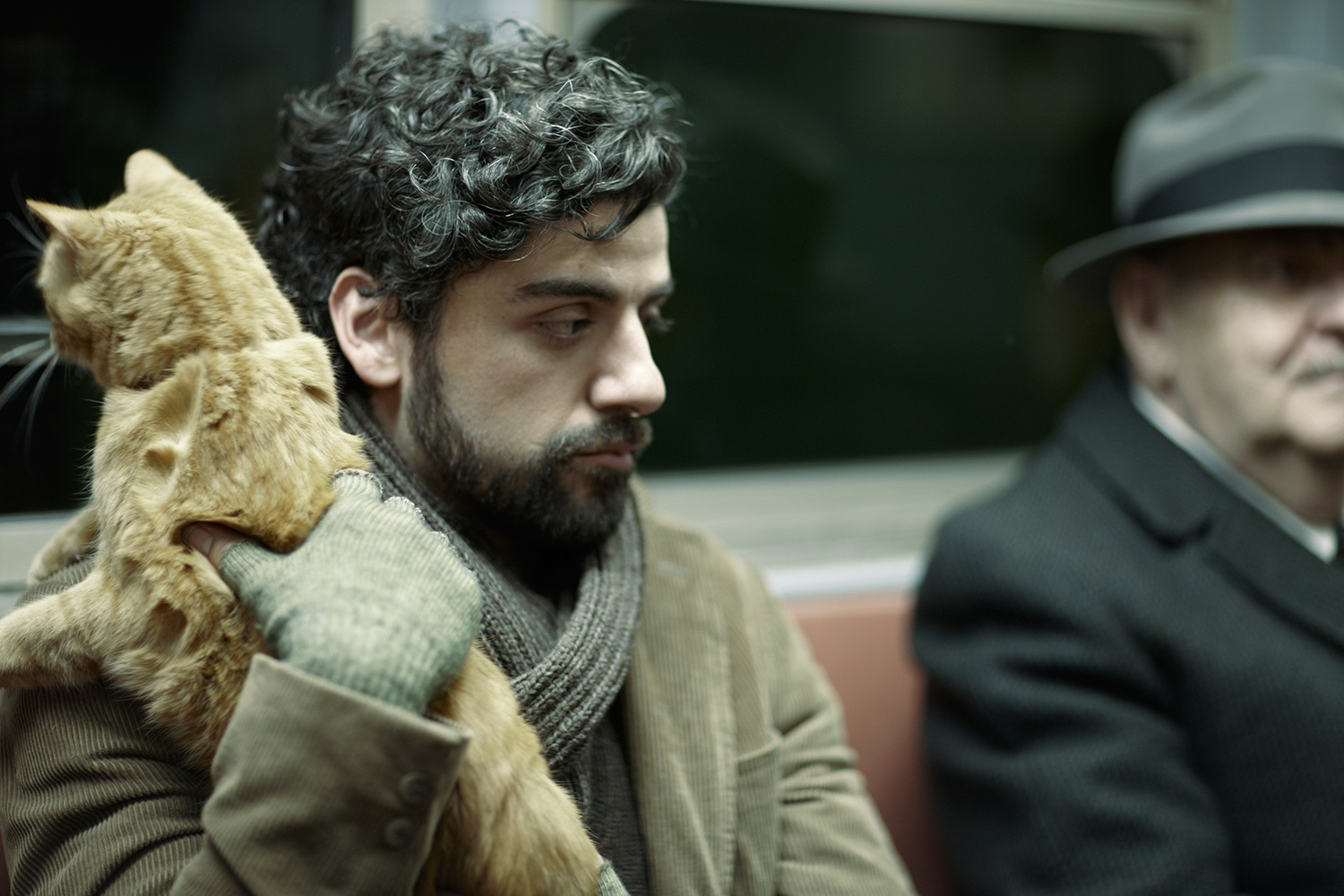
Point #3: Instead, I did not find the character Llewyn Davis off-putting. He is a self-absorbed singer-songwriter. That happens. The cat liked him. Get it over it. He is not Dave. Dave’s not here, man. I cared what happened to Llewyn. I can see, however, why folks did not, given then placement of the heckling scene at the front before we know that Mike killed himself, he loves Jean (of Jim & Jean), his dad sits mute, and he can hold a cat for days on end. In a conventional Hollywood film, all this would have been laid out so that we would like Llewyn, then he would display his pain publicly at the expense of faux-Jean Ritchie.


cat on shoulderCat and LD

Instead, the Coens take the substantial artistic risk of introducing us to Llewyn at his worst and working backward. The devise only works in part, mostly for the reason above.

And that is why this is a good, perhaps very good, Coen Brothers joint, but not a great one. Far, far better than Intolerable Cruelty or the Ladykillers, to me Inside Llewyn Davis ranks behind at least Big Lebowski, Barton Fink, True Grit, and O Brother. I did prefer the new release to the acclaimed No Country for Old Men, however. For this flick to have achieved greatness, we would have to genuinely like Llewyn the way we came to admire and root for the stoner bowler Dude.

Question #2: Did it make a difference that the Dude, Clooney’s Ulysses Everett McGill, or Marge Gunderson could have ended up dead or worse, while Llewyn only could have ended up sleeping on the floor, having cold, wet feet, or going back to work as a merchant seaman?

Point #4: My theory consists of John Goodman’s Turner being the foil to show Davis in a comparably good light. Whatever the reason, Turner proves to me the most unpleasant character in the Goodmangreat actor’s long career. He serves to get Llewyn to Chicago to audition for Grossman, but it may have been easier to walk than put up with his junkie insults. That Goodman is not a high point is likely another reason some folks are not endeared by Inside Llewyn Davis.

Final Point, Inside Llewyn Davis proves neither a mockumentary nor documentary about the folk music scene on the cusp of third twenty century wave of the folk revival. Inspired by real life people, places, and events, this is a work of fictional art to evoke the feel of a certain part of Manhattan and a certain segment of society and the fringe music business more than a half century ago.

The truths in this movie are about the fate of the self-absorbed, especially in face of dashed hopes and frustrating expectations. Whereas O Brother was a moving picture that used folk music to such an extent that it was almost a two hour music video, Inside Llewyn Davis uses the people of the Greenwich Village folk music scene to explore human desires and shortcomings.

Question #3: Did anyone else see Llewyn as the anti- Ulysses Everett McGill. Clooney’s memorable character never gave into the dark side, no matter how consistently dishonest and conniving he was. He believed so enthusiastically in his own bull, that he remained a thoroughly engaging, upbeat con man – emphasis on the con. No matter what, you can’t stay mad at Ulysses. Davis remains downbeat and cynical even at his funniest. You know McGill would steal from you, but you still liked him. Davis only wanted to borrow a few bucks and crash on the couch, but he is a downer with a little cloud over his head.

PS: I cannot get “Please Mr. Kennedy” out of my head. ImageI even played it on WCOM-FM 103.5 the other day. Click on the still for the studio scene.

And that leads to my most recent assertion about Inside Llewyn Davis, one that came to me a day after writing this essay. “Please Mr. Kennedy” is not merely a suggestion of the national obsession with the space race, which Mr. Kennedy essentially ended with the man on the moon goal. Nor does it just evoke the novelty song craze of the late 1950s and early 1960s, often folk-pop like “Honeycomb,” and allow a John Hammond, Sr.-inspired character to get in on the fun.

“Please Mr. Kennedy” provides the coda for Inside Llewyn Davis. At the least, it suggests the significance of setting the film in 1961 goes beyond exploring the three or five years between “Tom Dooley” (#1 week of Nov 17, 1958) and “Rock Island Line” (#8 week of March 24, 1956) and the full blown 1962-1965 Folk Scare, when the music was oh so important in determining who your friends and lovers were. On the movie’s website, Elijah Wald, who completed Dave’s memoir, offers an outstanding article about this time. Peter, Paul & Mary’s first Top Ten single, “If I Had A Hammer,” hit the charts in mid-August 1962 and with it the Folk Revival was underway. All that meant, really, was that commercial radio & TV and big time concert promoters latched on to folk while it was hot. In other words, folk moved from a novelty or niche form that could produce occasional hits to being THE pop music until displaced by the Beatles and Stones. Folk – rebranded and reconfigured as “singer-songwriter” – remained a strong component of commercial pop music well into the 1970s.

Enough digression. “Please Mr. Kennedy” in combination with the movie’s darkness, establishes Inside Llewyn Davis as a meditation on the failed hopes of the 1960s. The space program symbolizes our rising hopes in 1961 of an every better future in which we would overcome poverty, racism, and disease through technology and chemicals. Llewyn, in this interpretation, is not a bad portrayal of Dave van Ronk but of the decade itself, self absorption included. His trip to Chicago to have his hopes dashed and then coming back home to find things the same, only worse, becomes an easy metaphor for the times.

-30-

Concerts at The ArtsCenter in Carrboro, NC


Concerts at The ArtsCenter in Carrboro, NC.

Concerts at The ArtsCenter in Carrboro, NC


Image

My commitment to the community is to restore The ArtsCenter (300-G East Main St; Carrboro, NC 27510) to a position of primacy among folk and roots presenters between Alexandria, VA and Decatur, GA. Although we present concerts in the 355 seat Earl & Rhoda Wynn Theater and 106 seat West End Theater mostly Thursday through Sunday evenings, we sometimes present on any night and host jam sessions and song circles on Monday evenings. We share the use of these facilities with ArtsCenter Stage, the ArtSchool, more than a dozen resident theatre, comedy, improv, film, and dance companies, ArtsCamp, Youth Arts Blocks, and rentals ranging from Cat’s Cradle concerts to community square dances to bat and bar mitzvahs. For that reason, The ArtsCenter presents an average of 60 concerts for adults per year. Visit our website to learn about shows and concerts for children and families.

I have three decades experience in folk and bluegrass music and the support of outstanding concerts at The ArtsCenter sponsors including Chapel Hill Restaurant Group, Giorgios Hospitality Group, Atma Hotel Group (including the new Hampton next door), Furniture Lab, Brooks Pierce, and the North Carolina Arts Council.Image

Most of all we need your support as a donor, business sponsor, or ArtsCenter Friend, and as a ticket buyer. All these can be accomplished by visiting artscenterlive.org or calling 919-929-2787.

The ArtsCenter currently has this remarkable lineup of concerts scheduled

Monday, October 21, 2013 Ralph Stanley & The Clinch Mountain Boys
Wednesday, October 30, 2013 disappear fear (SONiA)
Saturday, November 09, 2013 Sam Bush
Friday, November 08, 2013 Quiet American with Adam Hurt & Beth Hartness
Friday, November 15, 2013 The Honeycutters
Sunday, November 17, 2013 Charlie King & Karen Brandow
Wednesday, November 20, 2013 Jake Shimabukuro
Thursday, November 21, 2013 Kirk Ridge, Lizzy Ross, Rebecca Newton, Jack Herrick, Joe Newberry, Nancy Middleton
Saturday, November 23, 2013 John Gorka
Friday, December 06, 2013 Dar Williams
Wednesday, December 18, 2013 FiddleX Holiday Concert
Friday, January 03, 2014 Robin & Linda Williams
Tuesday, January 07, 2014 Genticorum
Friday, January 10, 2014 Nu Blu
Saturday, January 11, 2014 Hot Club of Cowtown
Sunday, January 12, 2014 Dana & Susan Robinson
Thursday, January 16, 2014 Sparky & Rhonda Rucker
Friday, January 17, 2014 Frank Solivan & Dirty Kitchen
Saturday, January 18, 2014 GangstaGrass
Thursday, January 23, 2014 Cahallen Morrison & Eli West w/Bevel Summers
Saturday, February 01, 2014 Grace Pettis
Saturday, February 08, 2014 Joe Pug
Sunday, February 09, 2014 David Jacobs-Strain
Friday, February 21, 2014 Ennis
Saturday, February 22, 2014 Lucy Kaplansky
Tuesday, February 25, 2014 Clive Carroll
Sunday, March 09, 2014 Guy Davis
Wednesday, March 12, 2014 Rory Block
Thursday, March 13, 2014 Paul McKenna Band
Wednesday, March 19, 2014 Pete & Maura Kennedy
Friday, March 21, 2014 Missy Raines & the New Hip
Saturday, March 22, 2014 John McCutcheon
Thursday, March 27, 2014 Archie Fischer & Garnet Rogers
Friday, March 28, 2014 Scott Ainslie
Saturday, March 29, 2014 Foghorn String Band w/Piney Woods Boys
Friday, April 04, 2014 Sultans of String
Thursday, April 10, 2014 Drew Nelson
Friday, April 11, 2014 Seldom Scene
Sunday, April 13, 2014 Brother Sun
Wednesday, April 16, 2014 Paddy Kennan
Thursday, May 01, 2014 Cathie Ryan
Friday, May 02, 2014 April Verch
Friday, May 09, 2014 Rolling Roots Review
Sunday, May 11, 2014 Tret Fure
Sunday, June 08, 2014 Jeanette & Johnnie Williams with Louisa Branscomb
Saturday, June 28, 2014 Songs from the Circle 3
Thursday, July 31, 2014 Local songwriters featuring Katherine Whalen
Friday, September 05, 2014 Jonathan Edwards
Friday, September 12, 2014 Steve Forbert
Thursday, September 18, 2014 Sarah McQuaid
Saturday, November 15, 2014 Tom Paxton

World of Bluegrass 2013: The Owensboro Vision Realized in Raleigh


CharlesAndDannyBaileyWPTF

Flatt & Scruggs on WPTF Raleigh with Art Wooten and Jody Rainwater

Flatt & Scruggs on WPTF Raleigh with Art Wooten and Jody Rainwater

World of Bluegrass 2013: The Owensboro Vision Realized in Raleigh

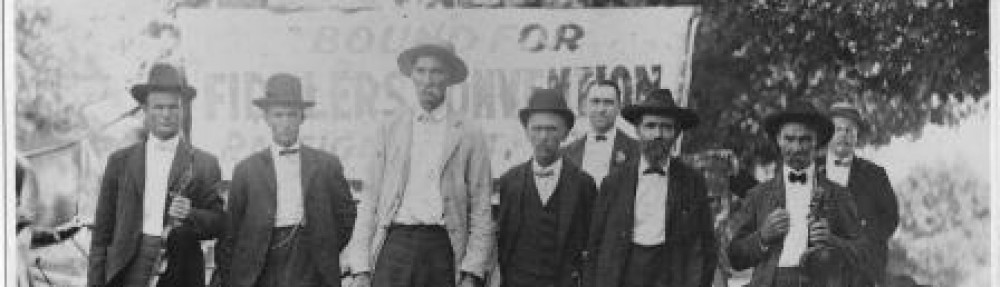
By Art Menius Sept 29, 2013cropped-raleigh-fiddlers-convention-b.jpg

Raleigh is a major reframing, a sincere transformation of WOB, but much in the spirit of Tony’s speech, it not only preserves but strengthens what is essential.

This week saw the Owensboro vision of 1985-1986 brought fully to life. I wish Terry Woodward, Sonny Osborne, and Burley Phelan could have seen it.

This was it in remarkable detail almost 30 years later in a different place with different people, but I saw what we talked about all around me come to life.

  • An outward looking event
  • An awards show in a beautiful concert hall
  • A fantastic convention center hosting the conference
  • Museums programming about bluegrass history.
  • Thousands in the street discovering bluegrass music, BBQ (the Owensboro parallels don’t stop, it seems), and a revitalized, exciting downtown.
  • A wonderful urban outdoor festival facility where my dad bought me my first car.
  • Hotel rooms filled, restaurants and  on pleasant fall days
  • Even an alternate rain location for the festival

That is the original vision for IBMA and Owensboro fully realized in 2013 by IBMA and Raleigh. Congratulations to Nancy Cardwell, Eddie Huffman, PineCone, William Lewis and the IBMA board, the host committee, Mayor Nancy McFarland, planning director Mitchell Silver (the Robert Moses of our generation), and everyone involved. I dissed my ole home town for decades, but ain’t gonna do that no more (except for the traffic, of course).

C Monroe & Spencer Brothers WPTF
Charlie Monroe with the Spencer Brothers on WPTF Raleigh 1946

This was what we wanted to do in Owensboro, create both an industry event and events that built the industry by engaging new consumers and branding a city with bluegrass. When we moved to Louisville and Nashville we lost the chance to brand but much more importantly, made a horrible mistake of convenience in taking Fan Fest totally indoors. That led to WOB becoming insular rather than expansive and Fan Fest almost useless for creating new fans.

Raleigh stood that tired approach on its head and welcomed thousands to bluegrass.Image

Bill and Caroline Monroe lived here at 1208 Fillmore Street in Raleigh during 1937 as Jan Johansson discovered below.Image

This reframing, of course, creates questions. Producing and marketing massive, popular events on Friday and Saturday makes them much more obvious than workshops and seminars on Wednesday. Yet as we saw, those worked very well.

Memorial Auditorium is not the Ryman in wow factor or history, but it can hold more people much more comfortably, and Charlie Monroe did live in its parking lot during 1937.

WNCN-17 (NBC) http://www.wncn.com/story/23558043/steve-martin-wraps-up-the-world-of-bluegrass

http://www.wncn.com/story/23549770/bluegrass-music-covers-downtown-raleigh

WRAL-5 (CBS)

http://www.wral.com/our-guide-to-wide-open-bluegrass-festival/12916443/

WTVD-11 (ABC)

http://abclocal.go.com/wtvd/story?section=news/local&id=9265619

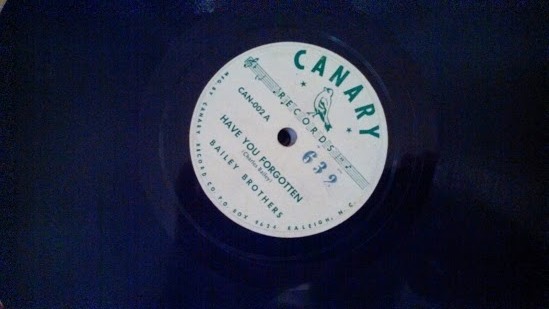
Bailey Brothers Canary 78 with Raleigh address

The Tennessean of Nashville

http://blogs.tennessean.com/tunein/2013/09/27/ibma-rules-raleigh-for-world-of-bluegrass/

And best by David Menconi in The hometown News and Observer

http://www.newsobserver.com/2013/09/28/3236286/world-of-bluegrass-hits-a-grand.html

From that: The IBMA conference had about 1,500 registrants, up from 1,118 in Nashville last year, and they filled all the downtown hotels. Thursday’s awards show at Memorial Auditorium drew a sellout crowd of around 2,200 – up from just over 2,000 in Nashville last year. And the 12,000 people attending the two Red Hat shows dwarfed the 8,000 that the IBMA’s “Fan Festival” drew in Nashville last year.

Another key statistic is IBMA membership, which got a bump from the buzz of this year’s convention. Membership is up 25 percent this year, according to IBMA executive director Nancy Cardwell.